Teachable Paid-Funnel Revenue Leak Report
Three paid-route risks are weakening the journey from language-teacher ad click to account creation.
Three paid-route risks are weakening the journey from language-teacher ad click to account creation.
Company audited: Teachable
Business URL: https://teachable.com
Paid destination audited: https://www.teachable.com/teach-languages
Audit date: July 24, 2026
Ad evidence: Five current public ad records were reviewed. Four use a Sign Up CTA and route directly to the language-teaching page; the fifth routes to the homepage with a creator success story.
Funnel depth tested: current public ad evidence → language-teaching paid destination → Starter monthly account-creation step 1 of 3. Account creation, trial activation, payment/order form, form submission, confirmation email, and lifecycle email were not tested. No irreversible action or payment was attempted.
Owner Brief
Your language-teacher campaign is doing an important thing right: four current signup ads lead to a dedicated, audience-specific destination rather than a generic homepage. The live page also carries the campaign into a working account-creation route.
But a fresh mobile prospect can lose almost the entire value proposition behind a consent dialog, wait materially longer than a desktop visitor for the page’s largest content element, and then reach a generic signup form that does not visibly confirm the selected Starter plan, trial duration, or renewal price.
These are paid-funnel risks, not generic design preferences. Each can quietly change when consent configuration, page code, campaign routing, pricing, or account onboarding is released independently.
Paid-ad problems
1. The mobile consent dialog covers the paid landing-page value proposition
Confidence: Confirmed
Four current public ads use Sign Up and route to your /teach-languages destination. On a fresh mobile visit, the consent dialog covers nearly the entire hero below Teach Languages Online. The main headline, supporting explanation, hero image, and in-content CTA are obscured; only the sticky header’s Start for free action remains clearly available.
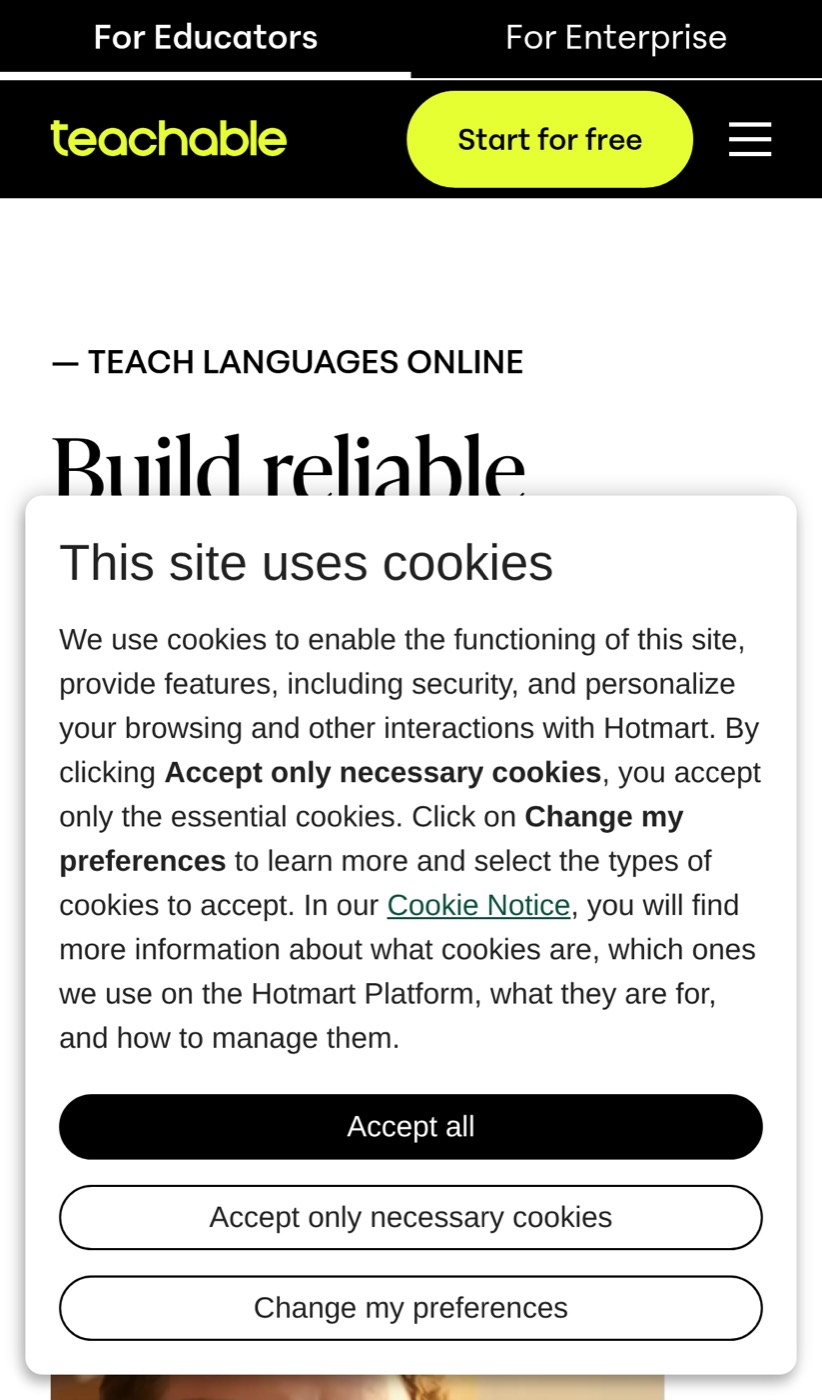
Evidence: the first-visit consent state covers the language-teaching value proposition while the sticky Start for free action remains visible.
Why this can waste spend: A first-time paid visitor has to make a privacy decision before they can evaluate the audience-specific promise that justified the click. The conversion action remains present, but the reasons to trust and choose it are hidden.
First fix: Reduce the mobile dialog’s occupied area, use a compact consent layer that leaves the headline and supporting promise visible, or reserve enough first-screen space so the paid message remains readable behind it. Validate the actual first-visit state—not only returning sessions where consent is already stored.
What continuous monitoring should catch: first-visit screenshots by device and region, consent-layer dimensions, hero visibility, CTA visibility, and regressions after consent-platform or legal-copy changes.
2. The signup handoff hides plan, trial, and renewal context
Confidence: Strong hypothesis
The language-teaching page’s Start for free links select starter-usd-monthly. The live mobile handoff then opens Create an account — Step 1 of 3 with Name, Email, password, and terms fields. It does not visibly repeat Starter, the trial duration, the monthly renewal price, billing timing, or the language-teaching context that brought the visitor there.
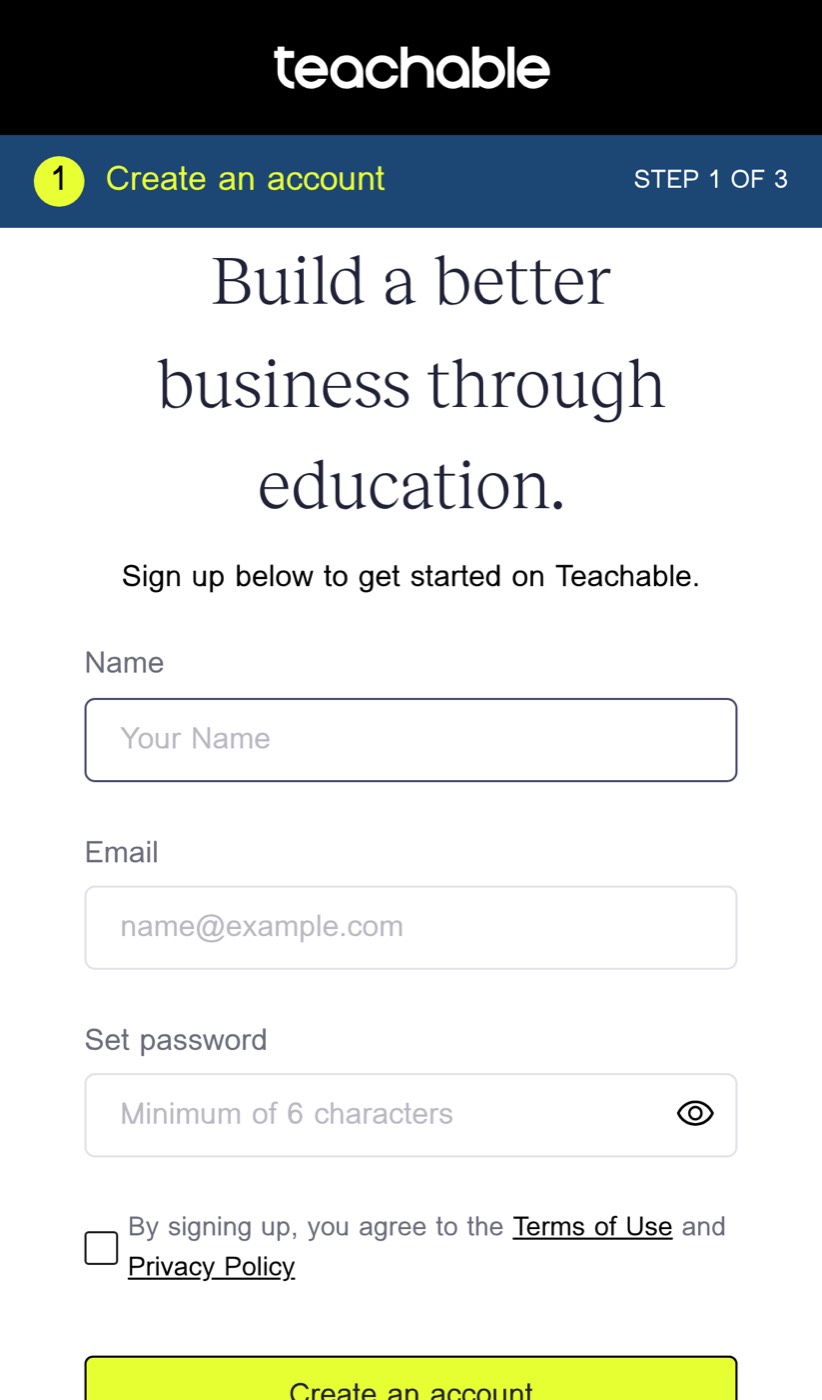
Evidence: the first account-creation screen is a generic Teachable form; no selected-plan, duration, renewal-price, or language-teacher context is visible.
Why this can waste spend: A signup prospect is being asked for identity details without a visible summary of what “free” starts or what happens after the trial. That context loss can create hesitation precisely at the first measurable conversion step.
First fix: Add a compact confirmation near the form: Starter monthly, exact free-trial duration, renewal price and billing timing, plus a short language-teacher continuity line. Keep those values driven by the selected plan so pricing changes cannot leave stale copy.
What continuous monitoring should catch: selected plan in the destination URL and onboarding state, trial duration, renewal price, billing cadence, campaign/audience context, and whether each paid CTA opens the intended signup variant.
3. The paid language-teaching page is materially slower on mobile than desktop
Confidence: Confirmed
A controlled mobile diagnostic on the live paid destination measured 4.86 seconds for the largest content element, 2.75 seconds for first content, 123 milliseconds of total blocking time, 56 requests, and approximately 1.40 MB transferred. The resulting mobile performance score was 75/100, and the largest-content timing was classified as poor.
The same destination measured 1.22 seconds for its largest content element on desktop with a 91/100 score. The diagnostic also identified approximately 305 KiB of unused JavaScript as an optimization opportunity.
Why this can waste spend: The campaign sends mobile prospects to an audience-specific story, but the main visual content arrives roughly four times later than in the desktop test. That widens the abandonment window before visitors can evaluate the offer or begin signup.
First fix: Profile the mobile critical path on this exact paid destination. Start with unused JavaScript, then verify whether consent, analytics, fonts, and hero media delay the largest element. Re-test from a mobile profile after each release.
What continuous monitoring should catch: mobile largest-content and first-content timing, page weight, request count, desktop/mobile divergence, and regressions introduced by analytics, personalization, consent, media, or campaign scripts.
Live-funnel evidence
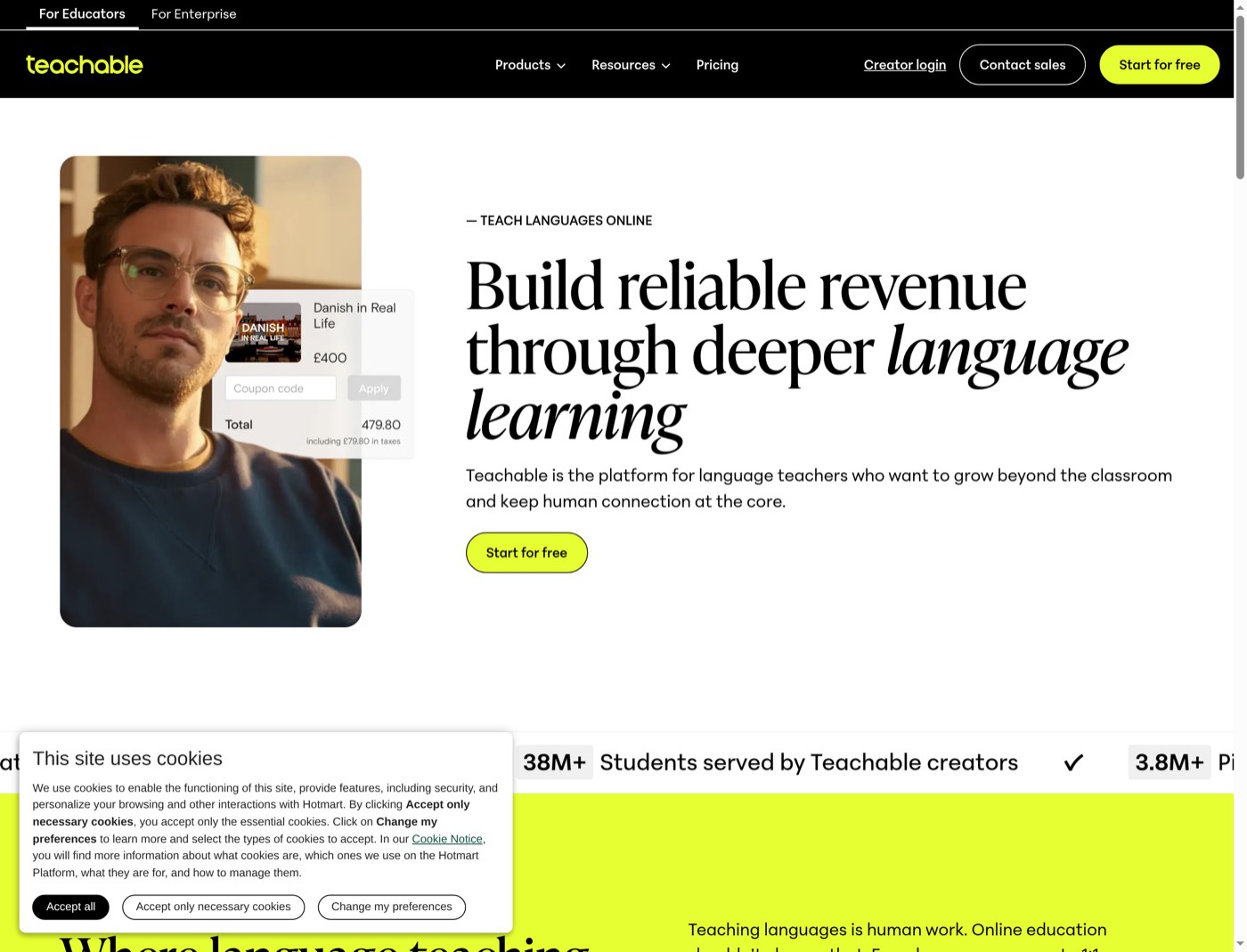
Desktop overview: the dedicated paid destination renders genuine Teachable content, a language-teacher-specific promise, and a visible Start for free path.
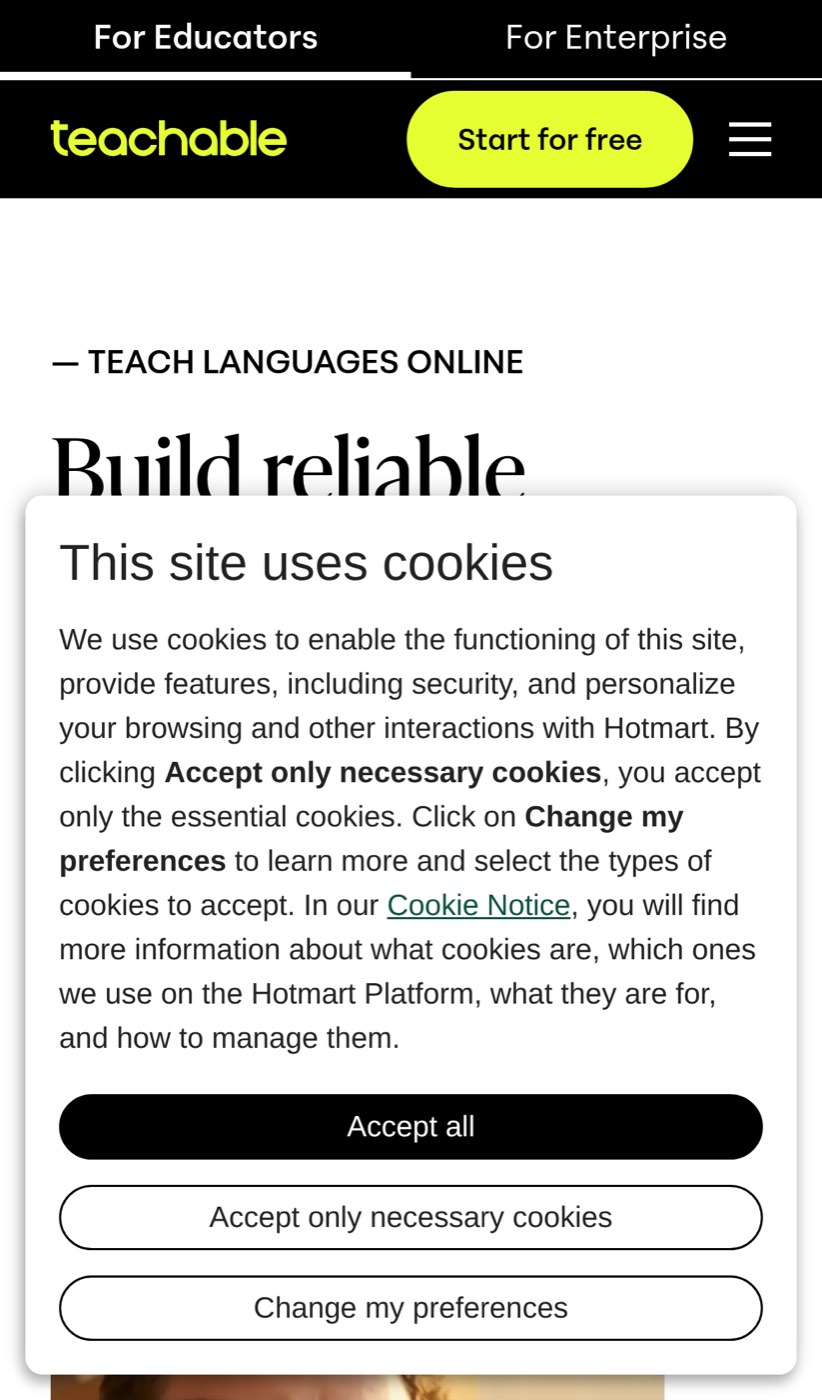
Mobile overview: the page is reachable without a challenge screen, but the first-visit consent layer dominates the paid visitor’s first screen.
What we verified—and what remains untested
The current public ad destinations, desktop and mobile presentation, first-visit consent state, 20 sampled links, tracking requests, campaign-parameter retention, and Starter monthly account-creation step were reviewed. All 20 sampled links resolved; one legacy enterprise URL redirected to its current enterprise destination. Campaign parameters stayed on the tested landing-page load and propagated into the observed cross-domain signup link.
The account form was not submitted and no account was created. Trial activation, final plan/price confirmation, payment or order form, conversion-event receipt, confirmation email, and lifecycle email were not tested. Those checks require an approved test identity and inbox; payment-stage monitoring should use a test environment or explicit authorization.
Market test context
A current direct competitor is actively routing ads to a dedicated Teachable comparison page and mixes Sign Up and Learn More calls to action. That does not prove the competitor converts better. It is a test hypothesis: monitor whether audience-specific signup pages or comparison-led education produce stronger qualified starts for your campaigns, rather than copying the pattern blindly.